Five Paths, Five Different Disciplines
Five distinct ways to bring AI into a B2B business, and the different discipline each one demands. Not one enterprise-wide bet.
Five distinct ways to bring AI into a B2B business, and the different discipline each one demands. Not one enterprise-wide bet.
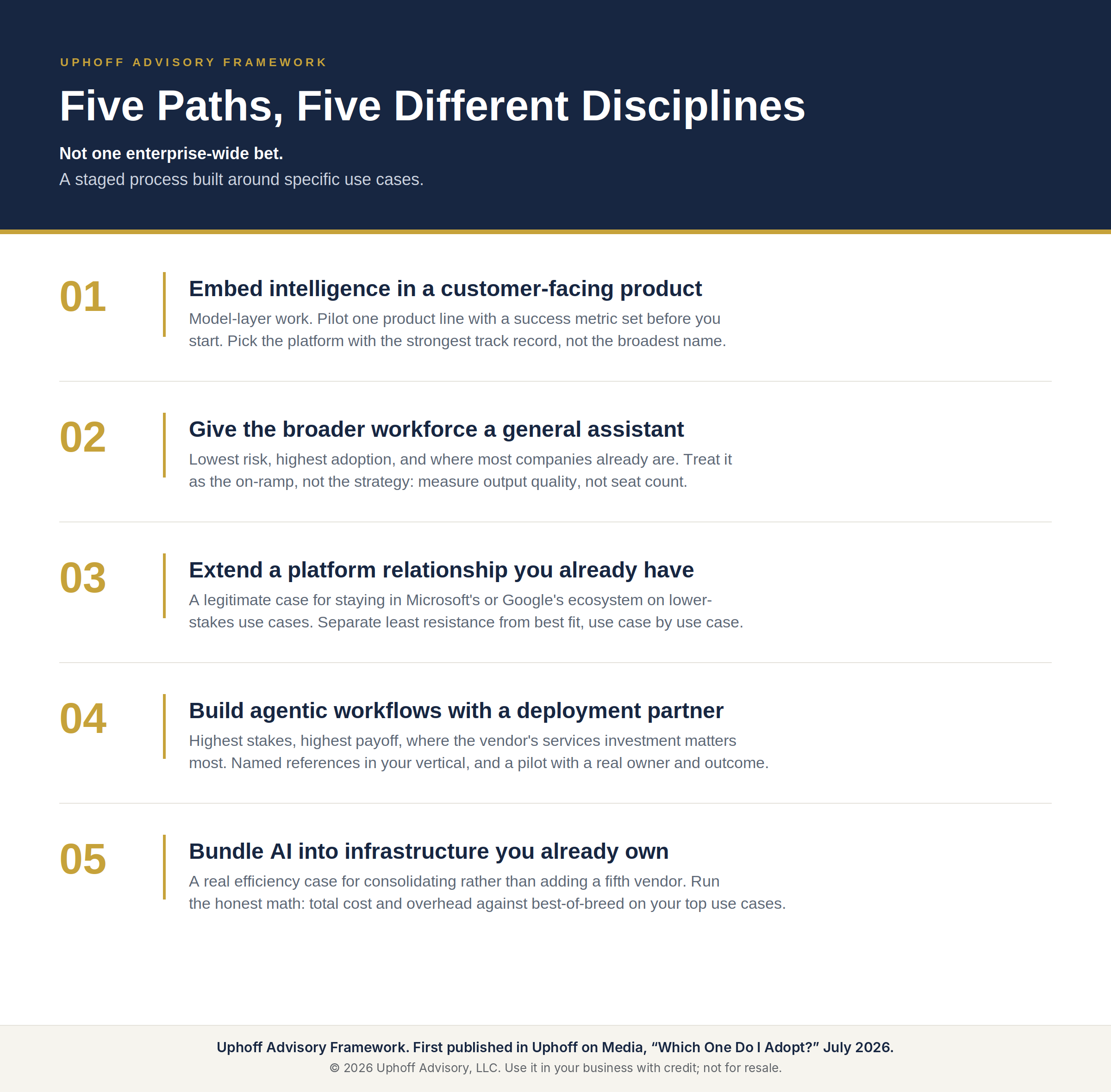
Five Paths, Five Different Disciplines is an AI adoption strategy built on one idea: there is no single way to bring AI into a B2B business. There are five. Embed intelligence in a customer-facing product, give the broader workforce a general assistant, extend a platform relationship you already have, build agentic workflows with a deployment partner, or bundle AI into infrastructure you already own. Each path carries different stakes and demands a different discipline.
The point is to stop treating AI as one enterprise-wide bet. In too many companies the “AI strategy” turns out to be a batch of chat licenses bought eighteen months ago and never revisited. That is a purchase order, not a strategy. A working AI adoption strategy names which paths you are on. Most companies will run more than one at once, and each needs its own success metric, owner and platform logic.
The common thread across all five: pilot before you scale, define the outcome before you start, and choose partners with proof in your specific industry.
List every AI tool and pilot you pay for and assign each to one of the five paths. Many companies find they are on path two and calling it a strategy.
Product work needs a capability metric set before you start. Workforce assistants need output quality, not seat counts. Agentic workflows need a named owner and a real outcome.
Pick the strongest platform for the capability each path needs, and separate least resistance from best fit instead of letting the current contract decide.
Before consolidating into a vendor you already own, compare total cost and integration overhead against best-of-breed on your top two or three use cases.
Embed intelligence in a customer-facing product; give the broader workforce a general assistant; extend a platform relationship you already have; build agentic workflows with a deployment partner; and bundle AI into infrastructure you already own.
Agentic workflows with a deployment partner carry the highest stakes and the highest payoff. Ask for named references in your vertical and pilot on a workflow with an accountable owner, not an innovation-lab side project.
Each path needs different skills, budget, metrics and governance. One bet underfunds most of them and overcommits to a single vendor before the market settles.
Related: Which One Do I Adopt? · The ADAC Stages · Four Moves to Make Now
Five Paths, Five Different Disciplines is an Uphoff Advisory Framework created by Tony Uphoff, five-time B2B CEO and founder of Uphoff Advisory, first published in Uphoff on Media on July 22, 2026. Read the full piece: Which One Do I Adopt?