The Bridge Plan
A shortfall never arrives alone. It arrives with a named owner, specific levers, and a date back to or above budget.
A shortfall never arrives alone. It arrives with a named owner, specific levers, and a date back to or above budget.
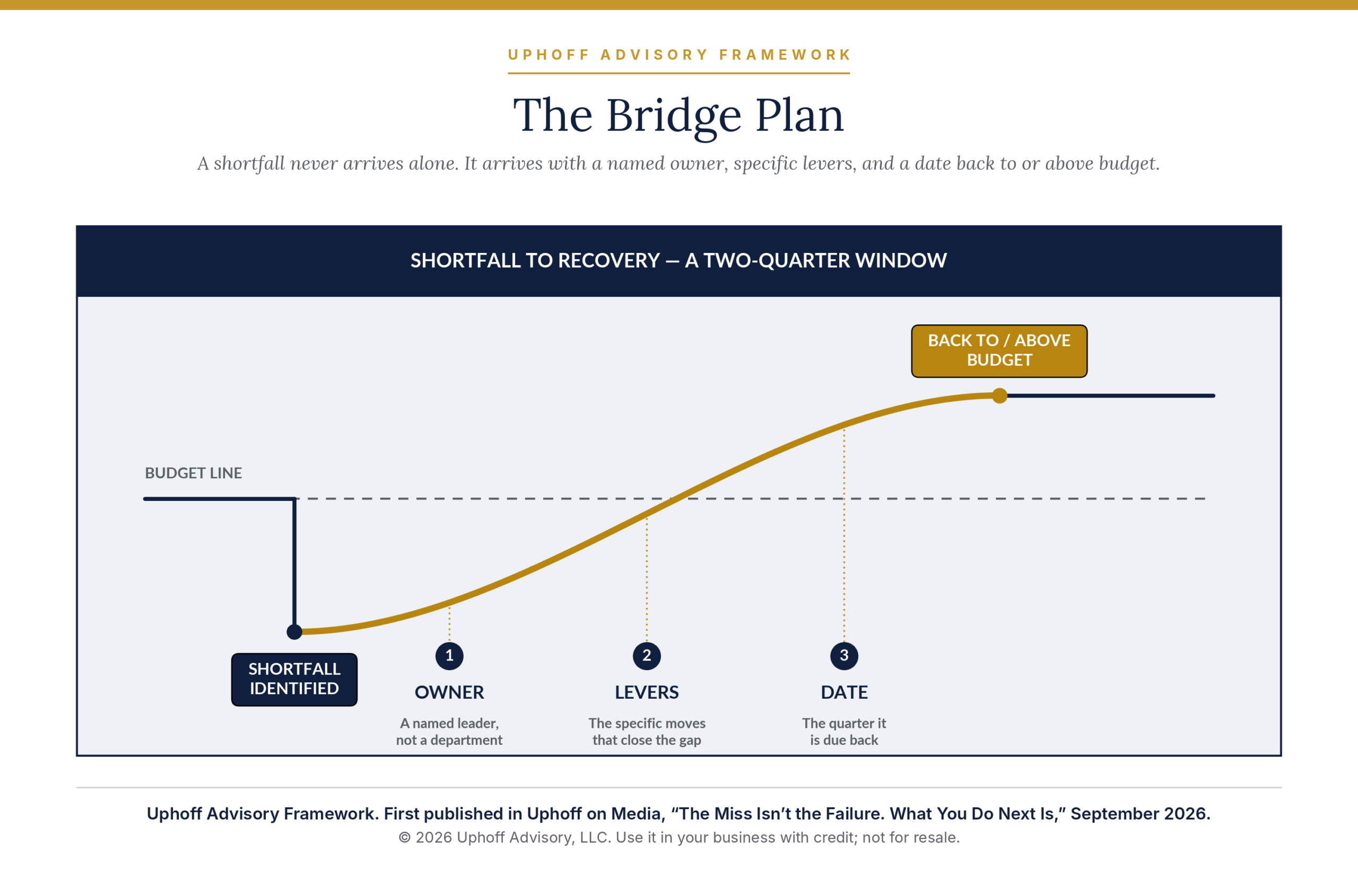
The Bridge Plan is a two-quarter recovery plan for a revenue shortfall. Whoever forecasts the gap brings the plan with it: a named owner, the specific levers that close the gap, and the quarter when revenue is back to or above budget. It turns a miss from a story into a plan the board can track.
The rule is simple: nobody brings the problem alone. That surfaces a shortfall while it’s still fixable, months before it would show up in a board deck. It also forces the person closest to the problem to diagnose it first, because nobody can build a credible bridge without knowing which cause they’re standing on.
Miscalculation, Market Dynamic, Execution Gap or Competitive Gap.
In dollars and percent against the budget the board approved.
A leader, not a department.
The specific moves that close the gap. “Work harder” isn’t one.
The quarter the number is due back, no more than two quarters out. Put rechecks at 30, 60 and 90 days on the same leading indicators that should have flagged the miss.
The person who owns the shortfall, before it reaches the CEO or the board.
Two quarters. A longer bridge usually means the diagnosis is wrong or the target needs resetting.
Related: The Miss Diagnostic · The Three-Case Model
The Bridge Plan is an Uphoff Advisory Framework created by Tony Uphoff, five-time B2B CEO and founder of Uphoff Advisory, first published in Uphoff on Media on September 8, 2026. Read the full piece: The Miss Isn’t the Failure. What You Do Next Is