The Miss Diagnostic
Plot a missed number by what you control and where the miss started, before you decide what to do about it.
Plot a missed number by what you control and where the miss started, before you decide what to do about it.
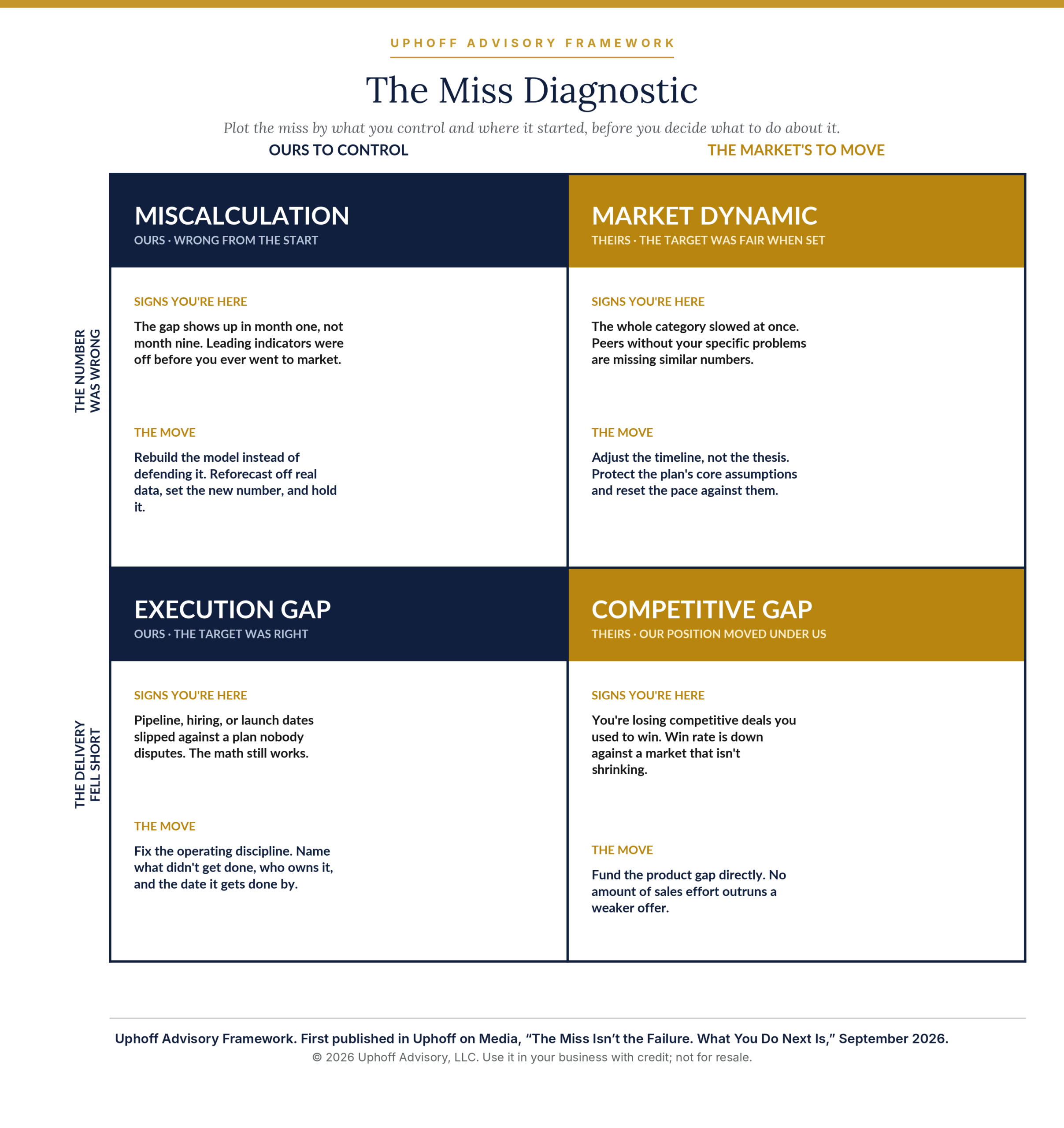
The Miss Diagnostic sorts a missed number into one of four causes before anyone decides what to do about it. One axis asks whether the miss was ours to control or the market’s to move. The other asks whether the number was wrong from the start or the delivery fell short. The four quadrants, Miscalculation, Market Dynamic, Execution Gap and Competitive Gap, each call for a different response.
When the number turns, leaders tend to defend the plan or blow it up. Both decide what happened before anyone has found out. A recovery plan built on the wrong diagnosis fails to fix the problem, and it also burns the credibility you’ll need the next time.
Pull pipeline conversion by stage, win-loss detail on the deals that slipped, what customers tell you directly, what competitors changed, and whether the miss is broad or concentrated.
Ours to control or the market’s to move, and the number wrong or the delivery short.
Miscalculation: rebuild the model, reforecast off real data and hold the new number. Market Dynamic: adjust the timeline, not the thesis. Execution Gap: name what didn’t get done, who owns it and the date. Competitive Gap: fund the product gap directly.
Tell the board first, in writing, and the team the same week.
Calling an execution gap a market dynamic means waiting two quarters for a recovery the market was never going to hand you. The reverse means firing people for a problem that was never theirs.
The Bridge Plan, which turns it into a named owner, specific levers and a date back to budget.
Related: The Bridge Plan · The Three-Case Model · The Goals-to-Systems Flywheel
The Miss Diagnostic is an Uphoff Advisory Framework created by Tony Uphoff, five-time B2B CEO and founder of Uphoff Advisory, first published in Uphoff on Media on September 8, 2026. Read the full piece: The Miss Isn’t the Failure. What You Do Next Is